 NanKai University
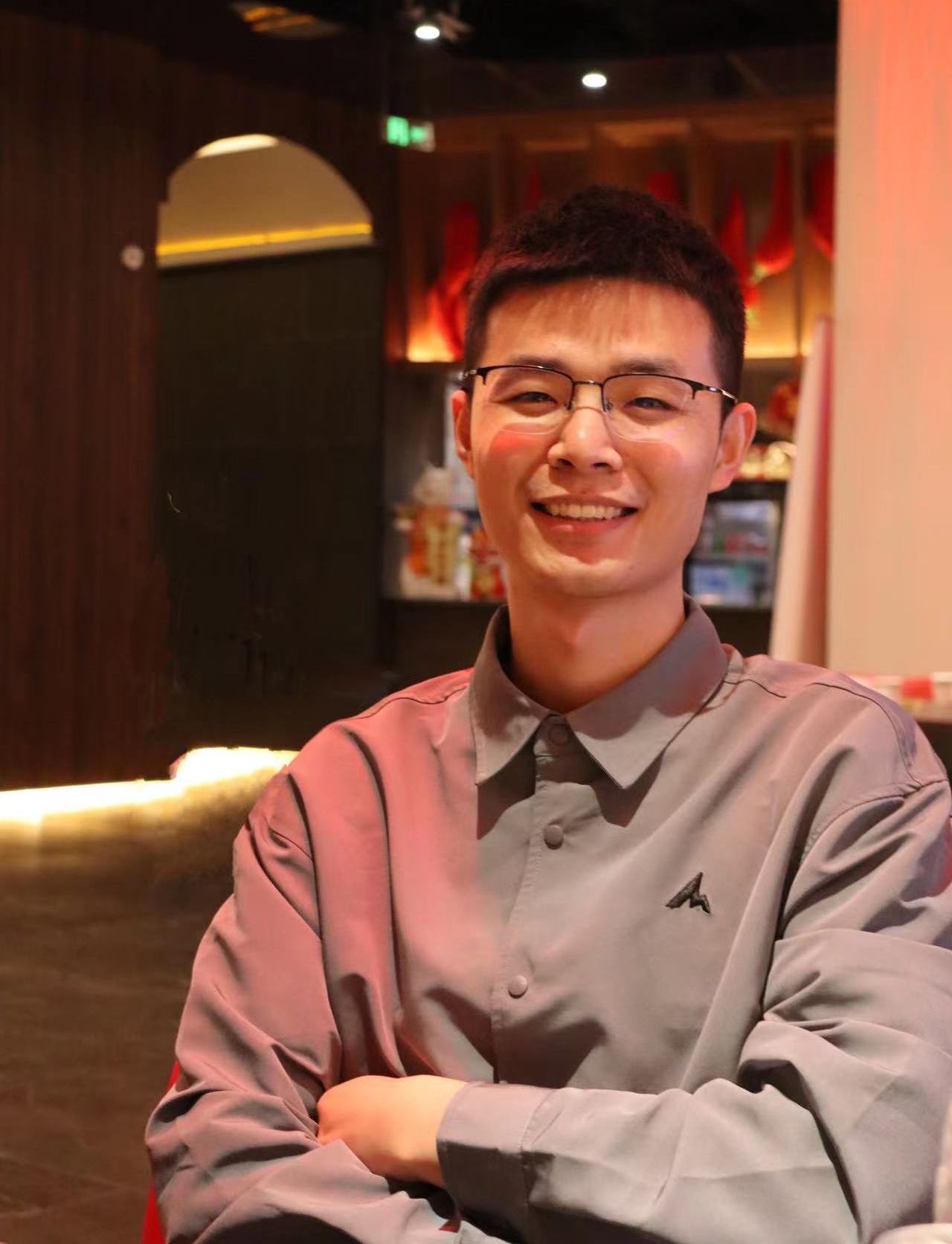
Hi! I am an Assistant Professor at the School of Mathematical Sciences, Nankai University. I received my Ph.D. from the Institute for Interdisciplinary Information Sciences, Tsinghua University in 2024, under the supervision of Prof. Jianyang Zeng.
My research resides in the frontier of AI for Life Science, where I seek to develop deep learning frameworks to decipher the fundamental mechanisms governing complex biological systems. I am particularly interested in the mechanistic and quantitative understanding of biological information flow, exploring how molecular interactions across various scales collectively shape complex biological traits and human health.
By integrating multi-modal and multi-scale omics data (including genomic, proteomic, metabolomic, single-cell, and spatially resolved profiles), my work aims to build unified computational frameworks that bridge the gap between microscopic molecular mechanisms and macroscopic phenotypic manifestations, ultimately empowering the next generation of precision medicine and drug discovery.
Education
-
 Tsinghua University
Institute for Interdisciplinary Information SciencesPh.D. in Computer ScienceSep. 2019 - Jun. 2024 -
 Jilin University
College of SoftwareB.S. in Software EngineeringSep. 2015 - Sep. 2019
Experience
-
Nankai University
School of Mathematical SciencesAssistant ProfessorJul. 2024 -
News
Selected Publications (view all )
ProMeta: A meta-learning framework for robust disease diagnosis and prediction from plasma proteomics
Han Li*#, Haoteng Gu*, Lei Hu*, Zimo Zhang, Yongji Lv, Peng Gao, Johnathan Cooper-Knock, Yaosen Min#, Jianyang Zeng#, Sai Zhang# (* equal contribution, # corresponding author)
Proceedings of the International Conference on Intelligent Systems for Molecular Biology (ISMB), Bioinformatics 2026
We developed ProMeta, a meta-learning framework designed for robust disease diagnosis and prediction using plasma proteomics data, effectively addressing the challenges of limited sample sizes through task-adaptive representation learning.
ProMeta: A meta-learning framework for robust disease diagnosis and prediction from plasma proteomics
Han Li*#, Haoteng Gu*, Lei Hu*, Zimo Zhang, Yongji Lv, Peng Gao, Johnathan Cooper-Knock, Yaosen Min#, Jianyang Zeng#, Sai Zhang# (* equal contribution, # corresponding author)
Proceedings of the International Conference on Intelligent Systems for Molecular Biology (ISMB), Bioinformatics 2026
We developed ProMeta, a meta-learning framework designed for robust disease diagnosis and prediction using plasma proteomics data, effectively addressing the challenges of limited sample sizes through task-adaptive representation learning.
PRSNet-2: End-to-end genotype-to-phenotype prediction via hierarchical graph neural networks
Han Li*#, Zisen Shan*, Hongyu Fu*, Yiwei Du, Shuaishuai Gao, Peng Gao, Johnathan Cooper-Knock, Yaosen Min#, Xudong Xing#, Sai Zhang# (* equal contribution, # corresponding author)
bioRxiv 2025
We developed PRSNet-2, an end-to-end hierarchical graph neural network framework that integrates multi-scale biological priors to significantly enhance the accuracy and interpretability of complex trait prediction from raw genotype data.
PRSNet-2: End-to-end genotype-to-phenotype prediction via hierarchical graph neural networks
Han Li*#, Zisen Shan*, Hongyu Fu*, Yiwei Du, Shuaishuai Gao, Peng Gao, Johnathan Cooper-Knock, Yaosen Min#, Xudong Xing#, Sai Zhang# (* equal contribution, # corresponding author)
bioRxiv 2025
We developed PRSNet-2, an end-to-end hierarchical graph neural network framework that integrates multi-scale biological priors to significantly enhance the accuracy and interpretability of complex trait prediction from raw genotype data.
SpaTranslator: A deep generative framework for universal spatial multi-omics cross-modality translation
Hongyu Dong, Sheng Mao, Yukuan Liu, Tian Tian, Lihua Zhang, Juanshu Wu, Shichen Zhang, Peng Jiang, Danqing Yin, Xudong Xing#, Peizhuo Wang#, Han Li# (# corresponding author)
bioRxiv 2025
We developed SpaTranslator, a universal deep generative framework that enables high-fidelity cross-modality translation between spatial transcriptomics and other spatial omics, facilitating the integration and comprehension of spatially resolved molecular landscapes.
SpaTranslator: A deep generative framework for universal spatial multi-omics cross-modality translation
Hongyu Dong, Sheng Mao, Yukuan Liu, Tian Tian, Lihua Zhang, Juanshu Wu, Shichen Zhang, Peng Jiang, Danqing Yin, Xudong Xing#, Peizhuo Wang#, Han Li# (# corresponding author)
bioRxiv 2025
We developed SpaTranslator, a universal deep generative framework that enables high-fidelity cross-modality translation between spatial transcriptomics and other spatial omics, facilitating the integration and comprehension of spatially resolved molecular landscapes.
A multistage, multitask transformer-based framework for multi-disease diagnosis and prediction using personal proteomes
Han Li*#, Yongkang Li*, Yukuan Liu*, Johnathan Cooper-Knock, Peng Gao, Xiaotao Shen, Shengquan Chen#, Xudong Xing#, Sai Zhang# (* equal contribution, # corresponding author)
medRxiv 2025
We developed a multitask Transformer framework that leverages longitudinal personal proteomic profiles to achieve high-accuracy diagnosis and future risk prediction for multiple complex diseases simultaneously.
A multistage, multitask transformer-based framework for multi-disease diagnosis and prediction using personal proteomes
Han Li*#, Yongkang Li*, Yukuan Liu*, Johnathan Cooper-Knock, Peng Gao, Xiaotao Shen, Shengquan Chen#, Xudong Xing#, Sai Zhang# (* equal contribution, # corresponding author)
medRxiv 2025
We developed a multitask Transformer framework that leverages longitudinal personal proteomic profiles to achieve high-accuracy diagnosis and future risk prediction for multiple complex diseases simultaneously.
Single-cell polygenic risk scores dissect cellular and molecular heterogeneity of complex human diseases
Sai Zhang, Hantao Shu, Jingtian Zhou, Jasper Rubin-Sigler, Xiaoyu Yang, Yuxi Liu, Johnathan Cooper-Knock, Emma Monte, Chenchen Zhu, Sharon Tu, Han Li, Mingming Tong, Joseph R. Ecker, Justin K. Ichida, Yin Shen, Jianyang Zeng, Philip S. Tsao, Michael P. Snyder
Nature Biotechnology 2025
We introduced a framework for calculating polygenic risk scores at the single-cell level, enabling the dissection of cell-type-specific genetic vulnerabilities and molecular heterogeneity across complex human diseases.
Single-cell polygenic risk scores dissect cellular and molecular heterogeneity of complex human diseases
Sai Zhang, Hantao Shu, Jingtian Zhou, Jasper Rubin-Sigler, Xiaoyu Yang, Yuxi Liu, Johnathan Cooper-Knock, Emma Monte, Chenchen Zhu, Sharon Tu, Han Li, Mingming Tong, Joseph R. Ecker, Justin K. Ichida, Yin Shen, Jianyang Zeng, Philip S. Tsao, Michael P. Snyder
Nature Biotechnology 2025
We introduced a framework for calculating polygenic risk scores at the single-cell level, enabling the dissection of cell-type-specific genetic vulnerabilities and molecular heterogeneity across complex human diseases.
Modeling gene interactions in polygenic prediction via geometric deep learning
Han Li, Jianyang Zeng, Michael P. Snyder, Sai Zhang
Genome Research 2025
We developed PRS-Net, a geometric deep learning framework that captures complex gene-gene interactions through biological networks to improve the accuracy and interpretability of polygenic risk scores.
Modeling gene interactions in polygenic prediction via geometric deep learning
Han Li, Jianyang Zeng, Michael P. Snyder, Sai Zhang
Genome Research 2025
We developed PRS-Net, a geometric deep learning framework that captures complex gene-gene interactions through biological networks to improve the accuracy and interpretability of polygenic risk scores.
PRSNet: Interpretable polygenic risk scores via geometric learning
Han Li, Jianyang Zeng, Michael P. Snyder, Sai Zhang
International Conference on Research in Computational Molecular Biology (RECOMB) 2024
We introduced PRS-net, a geometric deep learning framework that incorporates biological network topologies to enhance the accuracy and interpretability of polygenic risk scores across complex human traits.
PRSNet: Interpretable polygenic risk scores via geometric learning
Han Li, Jianyang Zeng, Michael P. Snyder, Sai Zhang
International Conference on Research in Computational Molecular Biology (RECOMB) 2024
We introduced PRS-net, a geometric deep learning framework that incorporates biological network topologies to enhance the accuracy and interpretability of polygenic risk scores across complex human traits.
A knowledge-guided pre-training framework for improving molecular representation learning
Han Li, Ruotian Zhang, Yaosen Min, Dacheng Ma, Dan Zhao, Jianyang Zeng
Nature Communications 2023
We developed KPGT, a self-supervised learning framework that integrates molecular descriptors and structural knowledge to significantly enhance the accuracy and robustness of molecular representation learning.
A knowledge-guided pre-training framework for improving molecular representation learning
Han Li, Ruotian Zhang, Yaosen Min, Dacheng Ma, Dan Zhao, Jianyang Zeng
Nature Communications 2023
We developed KPGT, a self-supervised learning framework that integrates molecular descriptors and structural knowledge to significantly enhance the accuracy and robustness of molecular representation learning.