教育
-
 清华大学
清华大学
交叉信息研究院计算机科学博士2019年9月 - 2024年6月 -
 吉林大学
吉林大学
软件学院软件工程学士2015年9月 - 2019年9月
工作经历
-
 南开大学
南开大学
数学科学学院助理教授2024年7月 -
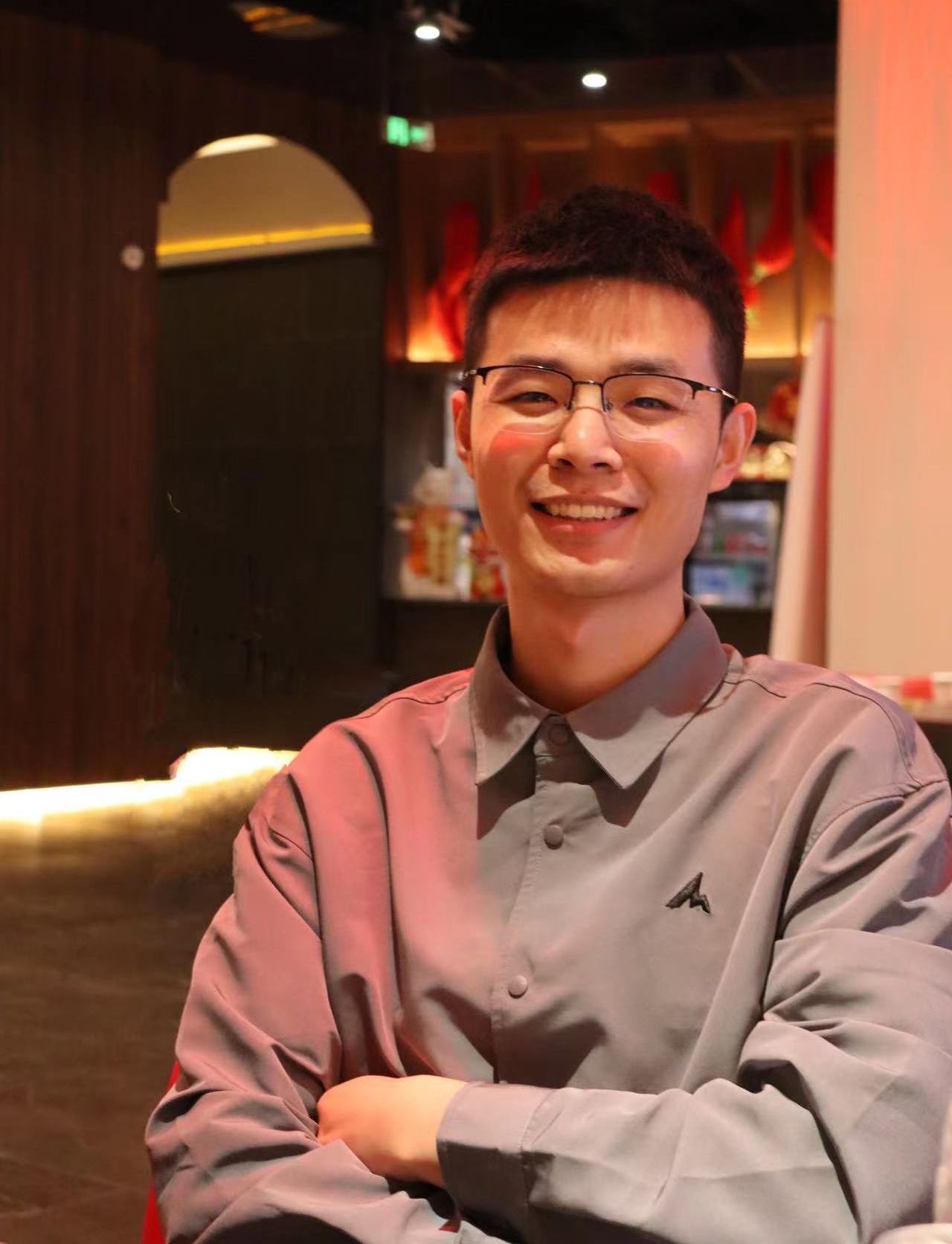
嗨!我是南开大学数学科学学院的助理教授。我于2024年在清华大学交叉信息研究院 获得博士学位,导师是 曾坚阳教授。
我们的研究方向是AI for Life Science,致力于开发深度学习框架,以揭示复杂生物系统的根本机制。我们特别关注生物信息流的机制和定量理解,探索不同尺度上的分子相互作用如何共同塑造复杂的生物性状和人类健康。
通过整合多模态和多尺度组学数据(包括基因组、蛋白质组、代谢组、单细胞和空间组学数据),我们致力于构建统一的计算框架,弥合微观分子机制与宏观表型表现之间的差距,最终赋能精准医学和药物发现的新一代方法。
最新动态
精选论文 (查看全部 )
ProMeta: A meta-learning framework for robust disease diagnosis and prediction from plasma proteomics
Han Li*#, Haoteng Gu*, Lei Hu*, Zimo Zhang, Yongji Lv, Peng Gao, Johnathan Cooper-Knock, Yaosen Min#, Jianyang Zeng#, Sai Zhang# (* equal contribution, # corresponding author)
Proceedings of the International Conference on Intelligent Systems for Molecular Biology (ISMB), Bioinformatics 2026
We developed ProMeta, a meta-learning framework designed for robust disease diagnosis and prediction using plasma proteomics data, effectively addressing the challenges of limited sample sizes through task-adaptive representation learning.
ProMeta: A meta-learning framework for robust disease diagnosis and prediction from plasma proteomics
Han Li*#, Haoteng Gu*, Lei Hu*, Zimo Zhang, Yongji Lv, Peng Gao, Johnathan Cooper-Knock, Yaosen Min#, Jianyang Zeng#, Sai Zhang# (* equal contribution, # corresponding author)
Proceedings of the International Conference on Intelligent Systems for Molecular Biology (ISMB), Bioinformatics 2026
We developed ProMeta, a meta-learning framework designed for robust disease diagnosis and prediction using plasma proteomics data, effectively addressing the challenges of limited sample sizes through task-adaptive representation learning.
PRSNet-2: End-to-end genotype-to-phenotype prediction via hierarchical graph neural networks
Han Li*#, Zisen Shan*, Hongyu Fu*, Yiwei Du, Shuaishuai Gao, Peng Gao, Johnathan Cooper-Knock, Yaosen Min#, Xudong Xing#, Sai Zhang# (* equal contribution, # corresponding author)
bioRxiv 2025
We developed PRSNet-2, an end-to-end hierarchical graph neural network framework that integrates multi-scale biological priors to significantly enhance the accuracy and interpretability of complex trait prediction from raw genotype data.
PRSNet-2: End-to-end genotype-to-phenotype prediction via hierarchical graph neural networks
Han Li*#, Zisen Shan*, Hongyu Fu*, Yiwei Du, Shuaishuai Gao, Peng Gao, Johnathan Cooper-Knock, Yaosen Min#, Xudong Xing#, Sai Zhang# (* equal contribution, # corresponding author)
bioRxiv 2025
We developed PRSNet-2, an end-to-end hierarchical graph neural network framework that integrates multi-scale biological priors to significantly enhance the accuracy and interpretability of complex trait prediction from raw genotype data.
SpaTranslator: A deep generative framework for universal spatial multi-omics cross-modality translation
Hongyu Dong, Sheng Mao, Yukuan Liu, Tian Tian, Lihua Zhang, Juanshu Wu, Shichen Zhang, Peng Jiang, Danqing Yin, Xudong Xing#, Peizhuo Wang#, Han Li# (# corresponding author)
bioRxiv 2025
We developed SpaTranslator, a universal deep generative framework that enables high-fidelity cross-modality translation between spatial transcriptomics and other spatial omics, facilitating the integration and comprehension of spatially resolved molecular landscapes.
SpaTranslator: A deep generative framework for universal spatial multi-omics cross-modality translation
Hongyu Dong, Sheng Mao, Yukuan Liu, Tian Tian, Lihua Zhang, Juanshu Wu, Shichen Zhang, Peng Jiang, Danqing Yin, Xudong Xing#, Peizhuo Wang#, Han Li# (# corresponding author)
bioRxiv 2025
We developed SpaTranslator, a universal deep generative framework that enables high-fidelity cross-modality translation between spatial transcriptomics and other spatial omics, facilitating the integration and comprehension of spatially resolved molecular landscapes.
A multistage, multitask transformer-based framework for multi-disease diagnosis and prediction using personal proteomes
Han Li*#, Yongkang Li*, Yukuan Liu*, Johnathan Cooper-Knock, Peng Gao, Xiaotao Shen, Shengquan Chen#, Xudong Xing#, Sai Zhang# (* equal contribution, # corresponding author)
medRxiv 2025
We developed a multitask Transformer framework that leverages longitudinal personal proteomic profiles to achieve high-accuracy diagnosis and future risk prediction for multiple complex diseases simultaneously.
A multistage, multitask transformer-based framework for multi-disease diagnosis and prediction using personal proteomes
Han Li*#, Yongkang Li*, Yukuan Liu*, Johnathan Cooper-Knock, Peng Gao, Xiaotao Shen, Shengquan Chen#, Xudong Xing#, Sai Zhang# (* equal contribution, # corresponding author)
medRxiv 2025
We developed a multitask Transformer framework that leverages longitudinal personal proteomic profiles to achieve high-accuracy diagnosis and future risk prediction for multiple complex diseases simultaneously.
Single-cell polygenic risk scores dissect cellular and molecular heterogeneity of complex human diseases
Sai Zhang, Hantao Shu, Jingtian Zhou, Jasper Rubin-Sigler, Xiaoyu Yang, Yuxi Liu, Johnathan Cooper-Knock, Emma Monte, Chenchen Zhu, Sharon Tu, Han Li, Mingming Tong, Joseph R. Ecker, Justin K. Ichida, Yin Shen, Jianyang Zeng, Philip S. Tsao, Michael P. Snyder
Nature Biotechnology 2025
We introduced a framework for calculating polygenic risk scores at the single-cell level, enabling the dissection of cell-type-specific genetic vulnerabilities and molecular heterogeneity across complex human diseases.
Single-cell polygenic risk scores dissect cellular and molecular heterogeneity of complex human diseases
Sai Zhang, Hantao Shu, Jingtian Zhou, Jasper Rubin-Sigler, Xiaoyu Yang, Yuxi Liu, Johnathan Cooper-Knock, Emma Monte, Chenchen Zhu, Sharon Tu, Han Li, Mingming Tong, Joseph R. Ecker, Justin K. Ichida, Yin Shen, Jianyang Zeng, Philip S. Tsao, Michael P. Snyder
Nature Biotechnology 2025
We introduced a framework for calculating polygenic risk scores at the single-cell level, enabling the dissection of cell-type-specific genetic vulnerabilities and molecular heterogeneity across complex human diseases.
Modeling gene interactions in polygenic prediction via geometric deep learning
Han Li, Jianyang Zeng, Michael P. Snyder, Sai Zhang
Genome Research 2025
We developed PRS-Net, a geometric deep learning framework that captures complex gene-gene interactions through biological networks to improve the accuracy and interpretability of polygenic risk scores.
Modeling gene interactions in polygenic prediction via geometric deep learning
Han Li, Jianyang Zeng, Michael P. Snyder, Sai Zhang
Genome Research 2025
We developed PRS-Net, a geometric deep learning framework that captures complex gene-gene interactions through biological networks to improve the accuracy and interpretability of polygenic risk scores.
PRSNet: Interpretable polygenic risk scores via geometric learning
Han Li, Jianyang Zeng, Michael P. Snyder, Sai Zhang
International Conference on Research in Computational Molecular Biology (RECOMB) 2024
We introduced PRS-net, a geometric deep learning framework that incorporates biological network topologies to enhance the accuracy and interpretability of polygenic risk scores across complex human traits.
PRSNet: Interpretable polygenic risk scores via geometric learning
Han Li, Jianyang Zeng, Michael P. Snyder, Sai Zhang
International Conference on Research in Computational Molecular Biology (RECOMB) 2024
We introduced PRS-net, a geometric deep learning framework that incorporates biological network topologies to enhance the accuracy and interpretability of polygenic risk scores across complex human traits.
A knowledge-guided pre-training framework for improving molecular representation learning
Han Li, Ruotian Zhang, Yaosen Min, Dacheng Ma, Dan Zhao, Jianyang Zeng
Nature Communications 2023
We developed KPGT, a self-supervised learning framework that integrates molecular descriptors and structural knowledge to significantly enhance the accuracy and robustness of molecular representation learning.
A knowledge-guided pre-training framework for improving molecular representation learning
Han Li, Ruotian Zhang, Yaosen Min, Dacheng Ma, Dan Zhao, Jianyang Zeng
Nature Communications 2023
We developed KPGT, a self-supervised learning framework that integrates molecular descriptors and structural knowledge to significantly enhance the accuracy and robustness of molecular representation learning.